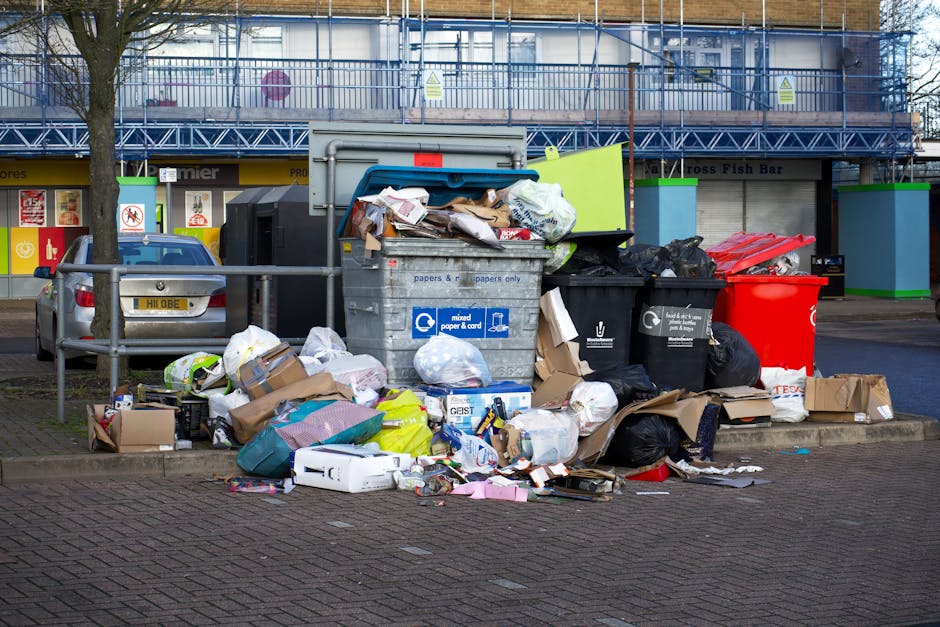
What to know about illegal dumping fines in Peckham Southwark
If you live, work, or manage property in Peckham, Southwark, illegal dumping is one of those problems that can turn up fast and make a street feel messy, unsafe, and a bit defeated. One fly-tipped mattress by a wall, a pile of builders' waste near a bin store, or a van-load of mixed rubbish left after dark can create a bigger headache than people expect. And yes, the fines matter.
This guide explains what to know about illegal dumping fines in Peckham Southwark in plain English: what counts as illegal dumping, how enforcement usually works, what penalties can follow, what mistakes get people into trouble, and how to avoid the kind of mess that ends up costing far more than a proper clearance ever would. Let's face it, nobody wants to deal with a fine on top of a rubbish problem.
Along the way, you'll also see practical ways to stay compliant, spot red flags with rogue collectors, and choose the right disposal route for different waste types. A few useful local resources are woven in too, including our Southwark rubbish rules guide for Peckham residents and our page on recycling and sustainability if you want to think beyond the immediate clear-up.
Table of Contents
- Why what to know about illegal dumping fines in Peckham Southwark matters
- How illegal dumping fines in Peckham Southwark works
- Key benefits and practical advantages
- Who this is for and when it makes sense
- Step-by-step guidance
- Expert tips for better results
- Common mistakes to avoid
- Tools, resources and recommendations
- Law, compliance, standards, or best practice
- Options, methods, or comparison table
- Case study or real-world example
- Practical checklist
- Conclusion
- Frequently asked questions
Why What to know about illegal dumping fines in Peckham Southwark Matters
Illegal dumping is more than an eyesore. In a place like Peckham, where streets, estates, loading bays, and shared access points all carry a lot of daily traffic, dumped rubbish can block pavements, attract vermin, create fire risks, and make residents feel as though nobody is in control. That's the real cost, before a fine even enters the picture.
For householders, landlords, builders, and small businesses, the bigger issue is this: if waste is found and traced back to you, a fine or enforcement action can follow even if you never intended to break the rules. That surprises people all the time. A neighbour "helping out" with your rubbish, a cheap collector who disappears, or a careless tenancy clear-out can all become your problem if the waste trail points back your way.
There is also a community side to it. Repeated fly-tipping can drag down pride in a street very quickly. You notice it in small ways first: a smell near the bins, a single broken chair left out, then more bags appear the next evening. It snowballs. That is why understanding illegal dumping fines is useful even if you personally have never dumped anything. Prevention is cheaper, cleaner, and a lot less stressful than cleanup after the fact.
How What to know about illegal dumping fines in Peckham Southwark Works
In simple terms, illegal dumping fines are penalties linked to waste being left, deposited, or handled improperly. The exact outcome depends on what was dumped, where it was left, who is responsible, and how the issue is discovered. In practice, enforcement can involve fixed penalties, further investigation, or action under local authority powers and wider waste law.
What tends to matter most is the chain of responsibility. If a waste bag contains paperwork with your address, if a fly-tip is linked to a property, or if a contractor cannot show proper disposal arrangements, it may trigger scrutiny. That is why "I didn't dump it myself" is not always the end of the story. Sometimes it is, sometimes it isn't. The details matter.
Peckham residents should also remember that different waste streams are treated differently. A couple of broken chairs are one thing; mixed builders' rubble, electricals, fridges, paint tins, or bags of commercial waste can create a more serious issue. A fridge or hazardous item can raise safety concerns, while mixed waste may suggest a bigger disregard for disposal rules.
Here's the basic flow many people experience:
- Waste is found in a public or semi-public place.
- Officials or investigators check labels, markings, CCTV, vehicle details, or paperwork.
- Responsibility is assessed based on the evidence available.
- A warning, charge, fixed penalty, clearance cost, or prosecution pathway may follow, depending on the facts.
That can sound formal on paper. In real life, it often starts with a small mistake. One man with a van offering a bargain price. One skipped receipt. One pile left "just for tonight." Then the knock-on effects begin.
Key Benefits and Practical Advantages
It may seem odd to talk about benefits in a topic about fines, but there are real advantages to understanding the system before you need it. The clearest one is financial. Knowing what counts as illegal dumping helps you avoid avoidable penalties, disposal charges, and emergency cleanup costs.
Another advantage is control. When you understand how local enforcement and waste responsibility usually work, you can make better decisions about who collects your rubbish, what records to keep, and how to prove you acted properly if challenged. That kind of paper trail is boring, admittedly, but it is the boring stuff that saves you later.
There is also a practical reputational benefit. For landlords, managing agents, and business owners in Peckham, a tidy waste setup tells people that the property is run properly. For households, it reduces the chance of neighbours associating your home with a recurring mess. Sounds small. It isn't.
- Lower financial risk: fewer fines, fewer repeat clearances, less chance of paying twice.
- Cleaner streets and access ways: better for residents, visitors, and collections.
- Less stress: you know what to do if waste is refused or reported.
- Better evidence: receipts, photos, and booking records can protect you.
- Improved compliance: useful for households, landlords, trades, and offices alike.
Who This Is For and When It Makes Sense
This topic is not just for people who have already been fined. It matters to anyone who generates waste in Peckham and wants to avoid trouble. That includes tenants moving out, homeowners clearing garages, builders handling job waste, cafe owners managing packaging, office managers clearing old furniture, and landlords dealing with end-of-tenancy rubbish.
It also matters if you are hiring help. If a low-cost collector offers to take away waste and gives you no details, no receipt, and no sign of where the rubbish is going, that is a risk you should think about carefully. To be fair, a cheap quote can look attractive on a rainy Tuesday afternoon when bags are piling up in the hall. But cheap and lawful are not always the same thing.
It makes sense to focus on illegal dumping fines when:
- you are arranging a one-off clear-out;
- you have builders' waste after work at home or on a job;
- you need to dispose of bulky items like sofas, mattresses, or appliances;
- you are not sure whether something can go in general rubbish;
- you manage a shared building, rental property, or business premises;
- you have seen fly-tipping near your property and want to understand your options.
If that sounds like your situation, you are in the right place. This is the kind of issue that sneaks up on ordinary people, not just large organisations.
Step-by-Step Guidance
Here is a practical way to handle waste properly and lower the chance of any fine-related trouble. It is not complicated, but it does need a bit of care.
1. Identify what kind of waste you have
Start by separating household rubbish, bulky items, builders' waste, electricals, garden cuttings, and any hazardous materials. A mixed pile often causes confusion, and confusion is where mistakes happen.
2. Check whether anything needs special handling
Paint, solvents, fridges, sharp items, and some electrical goods may need particular disposal arrangements. If you are unsure, pause before chucking everything together. That half-hour of checking can save you a lot more later.
3. Keep a record of who collected the waste
If you hire a collector, keep the booking details, invoice, vehicle information if available, and any message exchange. A simple email trail is better than nothing. Better still, use a provider that gives you clear terms and a proper record of disposal.
4. Ask where the waste will go
Reputable waste operators should be able to explain what happens next. They do not need to give you a lecture, just a straightforward answer. If the answer is vague, evasive, or oddly defensive, that is not a great sign.
5. Never leave waste on the pavement "temporarily"
Even if the intention is to move it later, leaving it in the wrong place can count as dumping if it creates an obstruction or is not collected properly. Peckham pavements are busy enough already.
6. Act quickly if waste has been dumped on your property
If rubbish appears outside your home, shop, or shared entrance, take photos and report it through the proper local route. Do not shift blame without evidence, and do not assume it will disappear on its own. Usually it doesn't.
7. Choose the right disposal method
For some jobs, a targeted service for house clearance, garage clearance, or builders' waste clearance will be more sensible than trying to deal with piles of mixed rubbish yourself.
Expert Tips for Better Results
In our experience, the people who avoid problems are not always the ones with the biggest budgets. They are usually the ones who are organised early and a little bit fussy in the right places.
Tip 1: Do not trust a bargain that skips the basics. A proper waste collection should come with clear communication, a sensible price, and a recognisable business trail. If someone says, "cash only, no paperwork, job done in ten minutes," that is not efficiency. That is risk.
Tip 2: Photograph the waste before and after collection. This is especially useful if you are managing a property or a business site. A quick phone photo can establish what was there and when it left. Simple, but effective.
Tip 3: Separate reusable items from waste. Sofas, desks, chairs, and white goods sometimes have value in reuse or recycling streams. If you want a more responsible route, our pages on furniture disposal and fridge and appliance removal may help you think through the practical side.
Tip 4: Be extra careful with shared bins. Shared residential areas are a classic flashpoint. One person overfills the area, another assumes someone else will deal with it, and suddenly everyone is staring at a pile nobody admits to. Funny in hindsight, less funny on collection day.
Tip 5: Keep waste movement predictable. If you know you are having work done, arrange disposal before the mess builds up. Mid-project panic leads to corner-cutting, and corner-cutting is how illegal dumping fines happen.
Tip 6: Think about sustainability as a money-saving habit. Recycling and sorting items properly can reduce disposal costs and make your clear-out easier to manage. It is not just a nice extra. Often it is the sensible route.
Common Mistakes to Avoid
Some of the most common mistakes are almost painfully ordinary. That is what makes them dangerous. People do not set out to break the rules; they just underestimate how quickly a waste issue can become a compliance problem.
- Using unverified collectors: If you cannot trace the operator, you may struggle later if waste is dumped.
- Leaving rubbish outside too long: Even a short delay can create an obstruction or attract extra dumping.
- Mixing hazardous items with general waste: This can create safety problems and disposal headaches.
- Failing to keep records: No invoice, no receipt, no proof. That is a hard place to be.
- Assuming "someone else" is responsible: Responsibility can still come back to the person arranging the waste move.
- Ignoring repeat fly-tipping: If it keeps happening, there may be a property access, storage, or neighbour issue that needs fixing.
A smaller but still important mistake is overconfidence. People think rubbish is rubbish. In reality, waste categories and legal duties matter more than most expect. A single item can change the whole picture.
Tools, Resources and Recommendations
You do not need specialist software to handle waste properly, but a few practical tools help a lot. The simplest one is a phone camera. Take photos before, during, and after a collection. It takes seconds and gives you a decent record if anything is questioned later.
A notes app or shared folder is also useful for invoices, messages, and collection dates. If you manage multiple properties or business sites, a basic spreadsheet can save you from confusion. Nothing fancy. Just something you can actually find later.
For physical waste management, think in categories:
- bags and general household waste;
- bulky items like beds, sofas, and wardrobes;
- builders' materials such as rubble, timber, and packaging;
- office items including desks, chairs, and confidential paperwork;
- appliances and electricals;
- garden waste;
- hazardous or awkward materials that need special handling.
If your waste issue is broad and you want a single solution, services like home clearance, office clearance, or garden clearance can be more efficient than juggling several small disposal routes. For businesses, business waste removal may be the cleaner fit.
And if you are comparing providers, our pricing and quotes page is a sensible place to start before making a decision. You want clarity, not surprises hiding in the final line.
Law, Compliance, Standards, or Best Practice
Illegal dumping is not just a local nuisance issue; it sits inside a wider framework of waste responsibilities and environmental expectations. The exact enforcement path can vary depending on the circumstances, but the general principle is straightforward: waste should be stored, moved, and disposed of properly, and the person responsible for arranging it should take reasonable care.
Best practice in Peckham and wider Southwark usually means three things. First, know what your waste is. Second, keep evidence of who handled it. Third, use legitimate disposal routes instead of informal handovers that leave you exposed. That may sound obvious, yet plenty of cases start with someone trying to save a few pounds.
If waste contains items that could harm people or the environment, the expectation rises. Chemical products, broken glass, sharp metal, electrical appliances, or contaminated materials need more care than a standard bag drop. In shared housing or mixed-use buildings, managers should pay special attention to access points, bin stores, and contractor arrangements.
There is also a practical compliance angle for businesses and landlords. If you are generating waste regularly, it is worth having a repeatable process: who books the removal, who checks the paperwork, where records are stored, and what happens if waste is left behind. That tiny bit of structure can save a massive amount of bother later.
One more thing: if you are unsure about a waste item, do not guess. Ask, check, or separate it out. Guessing is where people get caught out, and nobody enjoys explaining a guess to an enforcement officer. Not really.
Options, Methods, or Comparison Table
Different waste situations need different solutions. The table below gives a practical overview so you can choose the route that fits the job, the risk, and the amount of material involved.
| Option | Best for | Strengths | Watch-outs |
|---|---|---|---|
| Self-arranged disposal | Small, simple household waste | Can be low cost if done properly; you stay in control | Needs time, transport, and correct sorting |
| Specialist clearance service | Bulky, mixed, or awkward waste | Faster, cleaner, and easier to document | Price varies by load size and access |
| Trade or business waste arrangement | Regular commercial waste | Good for repeat collections and compliance | Needs clear records and correct classification |
| Ad hoc cheap collector | Very limited cases, if properly verified | May seem quick and convenient | Highest risk if there is no paperwork or proof of disposal |
In simple terms, the more awkward, mixed, or time-sensitive the waste is, the more sensible a professional clearance route becomes. If you need a broader service, options like flat clearance and furniture clearance can be useful for larger household jobs. For metal, white goods, and broken appliances, targeted disposal services are often cleaner and safer.
Case Study or Real-World Example
Picture a small rental flat near a busy Peckham road. A tenant moves out quickly, leaving a sofa, two broken chairs, a bag of mixed waste, and some flattened boxes by the front entrance. The landlord wants the place ready for viewings by Monday, so there is pressure to sort it fast. Very fast, ideally.
Now, there are two ways this can go. In the first version, someone books a clearance service, asks for a proper quote, keeps the records, and has the items removed before they spill further into the communal area. The building stays tidy, neighbours stay calmer, and there is proof of what was taken.
In the second version, the landlord tells a friend to "take it away" and a van appears with no paperwork, no receipt, and no clear destination. A week later, similar furniture turns up dumped behind another block, and the link back to the original address becomes an issue. Nobody wanted trouble, but here we are.
That is the pattern you see again and again. The cost difference at the start looks small. The risk difference is huge. Truth be told, most people would rather pay a little more upfront than spend days untangling who handled what.
If you are dealing with bulky household items after a move, our mattress and sofa disposal page may be useful. For general property jobs, flat clearance is often the simpler route.
Practical Checklist
Use this checklist before you arrange any waste collection or clear-out in Peckham. It is short on purpose.
- Identify the waste type: household, bulky, trade, electrical, hazardous, or mixed.
- Separate special items: fridges, paint, sharp items, and anything potentially hazardous.
- Get a clear quote: know what is included and what is not.
- Check the collector is traceable: business details, booking record, and contact method.
- Keep evidence: photos, invoices, texts, or emails.
- Do not leave waste on the pavement: even "temporarily."
- Confirm the collection outcome: make sure everything is removed, not just shifted around.
- Store records safely: especially if you are a landlord or business owner.
- Report dumped waste promptly: faster reporting usually means better action.
- Review the process next time: if something felt dodgy, fix the process before the next job.
If you tick those boxes, you are already ahead of many of the avoidable problems people run into. Not perfect, just better prepared. And that counts.
Conclusion
What to know about illegal dumping fines in Peckham Southwark comes down to a simple idea: waste needs to be handled properly, and the people arranging disposal should be able to show they acted responsibly. The moment you lose traceability, leave rubbish in the wrong place, or trust the wrong collector, the risk rises quickly.
The good news is that most problems are preventable. Clear records, sensible sorting, verified collection, and prompt action when something is dumped on your property go a long way. That applies whether you are clearing a flat, managing an office, running a trade job, or just trying to get rid of a bulky sofa without creating a bigger headache.
Keep it straightforward. Ask questions. Keep proof. Choose the right disposal route. Small steps, but they matter more than people think.
Get a free quote today and see how much you can save.
And if the rubbish situation feels messy right now, do not beat yourself up. Sort the next step properly, and you will be back on steady ground soon enough.
Frequently Asked Questions
What counts as illegal dumping in Peckham Southwark?
Illegal dumping usually means leaving waste where it should not be left, or handing it to someone who does not dispose of it properly. That can include rubbish on pavements, fly-tipped bags, dumped furniture, builders' waste, or waste left in shared areas.
Can I be fined if someone else dumps waste linked to me?
Possibly, yes. If there is evidence connecting the waste back to your property, vehicle, or arrangement, responsibility can be examined. That is why records and due care matter so much.
What kind of evidence helps if I used a waste collector?
Keep the invoice, booking confirmation, messages, photos of the items, and any details you have about the collector. The more traceable the process, the better.
Are bulky items treated differently from normal household rubbish?
Often, yes. Sofas, mattresses, fridges, and similar items can need specific handling. They may also be more likely to be fly-tipped if they are left out carelessly.
What should I do if rubbish is dumped outside my property?
Take photos, avoid moving anything risky yourself, and report it through the proper local route. If the waste looks hazardous, be extra cautious and keep people away from it.
Is the cheapest waste collector ever a good idea?
Sometimes a lower price is genuine, but if there is no paperwork, no traceable business details, or a vague explanation of where the waste goes, that is a warning sign. Cheap can become expensive very quickly.
Do landlords have extra responsibilities with dumped waste?
They often have practical responsibilities to keep a property safe and managed, especially in shared buildings or at move-out. A good process for clear-outs and record-keeping helps avoid disputes.
Can builders' waste lead to bigger fines?
It can, particularly if the waste is heavy, mixed, or repeatedly left around a site. Builders' waste should be managed with care, and it should never be treated as something to "sort later."
What if I am not sure whether an item is hazardous?
Do not guess. Set it aside and check before disposal. Some items need special handling, and guessing can create safety and compliance problems.
How can I reduce the chance of fly-tipping near my home or business?
Keep waste areas tidy, avoid overfilling bins, arrange regular removals when needed, and report repeat dumping quickly. Small improvements can make a noticeable difference over time.
Is there a difference between waste removal and illegal dumping?
Yes. Waste removal is the lawful collection and disposal of rubbish. Illegal dumping is when waste is left, deposited, or handled improperly. The service itself is not the issue; the method and proof are.
What is the safest next step if I have a large clear-out coming up?
Plan ahead, separate waste types, get a clear quote, and use a traceable disposal route. For larger jobs, a proper clearance service is usually simpler and safer than a last-minute fix.